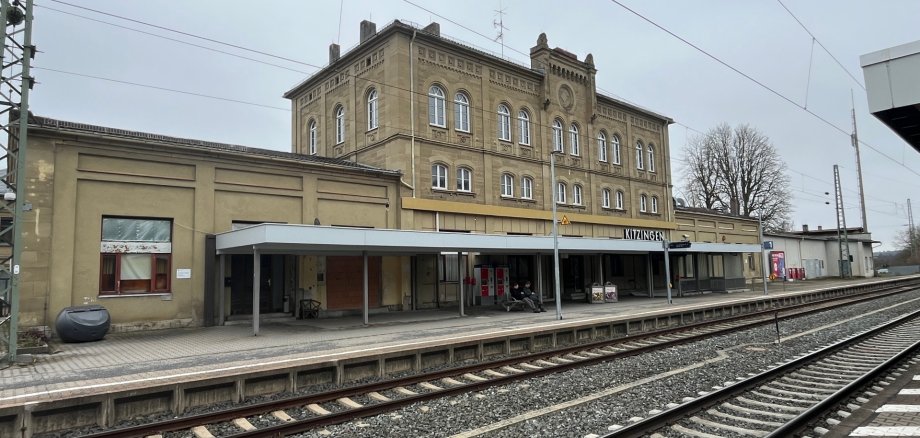
The lack of accessibility at Kitzingen railway station has been a source of frustration for many people for many years. In order to push for a solution, the town of Kitzingen has taken the initiative and devised a temporary solution for all wheelchair users, cyclists and people with heavy luggage. During a site visit in mid-May, Minister for Economic Affairs Huber Aiwanger pledged his support to the town. He has since received the requested documentation.
A stairlift, a ramp, a lift or a combination: there are several ways to provide access from Platform 1 to the two most frequently used platforms, 2 and 3. Staff at the planning office have drawn up a total of four possible options and produced schematic drawings of them. The access routes have been surveyed, and key infrastructure requirements such as power connections and switch boxes have been taken into account. “We could build a ramp for transporting heavy items ourselves and save money that way,” says Oliver Graumann, head of the building authority. An additional stairlift for wheelchair users would round off the project.
The documents were sent to the Ministry of Economic Affairs on Friday, 26 June. Lord Mayor Dr Enis Tiz is confident that the project will be processed promptly. Minister Aiwanger had announced that he would present the documents and models from Kitzingen to the relevant officials at Deutsche Bahn in order to push ahead with the temporary solution, and had spoken of a possible pilot project for other Bavarian stations. For technical reasons and with an eye to the costs, he favours the construction of a ramp with an additional stairlift. This would ensure safe access to and from the platforms for all wheelchair users and parents with pushchairs, and would also make things easier in future for passengers carrying heavy suitcases or other luggage. The city would assume liability for the facility and cover the maintenance costs, whilst Deutsche Bahn, as the owner and the licensing authority, would need to show flexibility regarding building regulations.
In mid-May, Minister Aiwanger had held out the prospect of a financial contribution to the town for the temporary solution. “We’ve done our homework,” says Dr Tiz. “Now it’s the railway’s turn.”