View of the Main
Diese Seite wurde automatisch übersetzt. Es kann daher zu Abweichungen oder Ungenauigkeiten im Text kommen. Verbindlich ist ausschließlich die Originalfassung. Rechtsansprüche aus Inhalten der übersetzten Version sind ausgeschlossen.

Climate protection

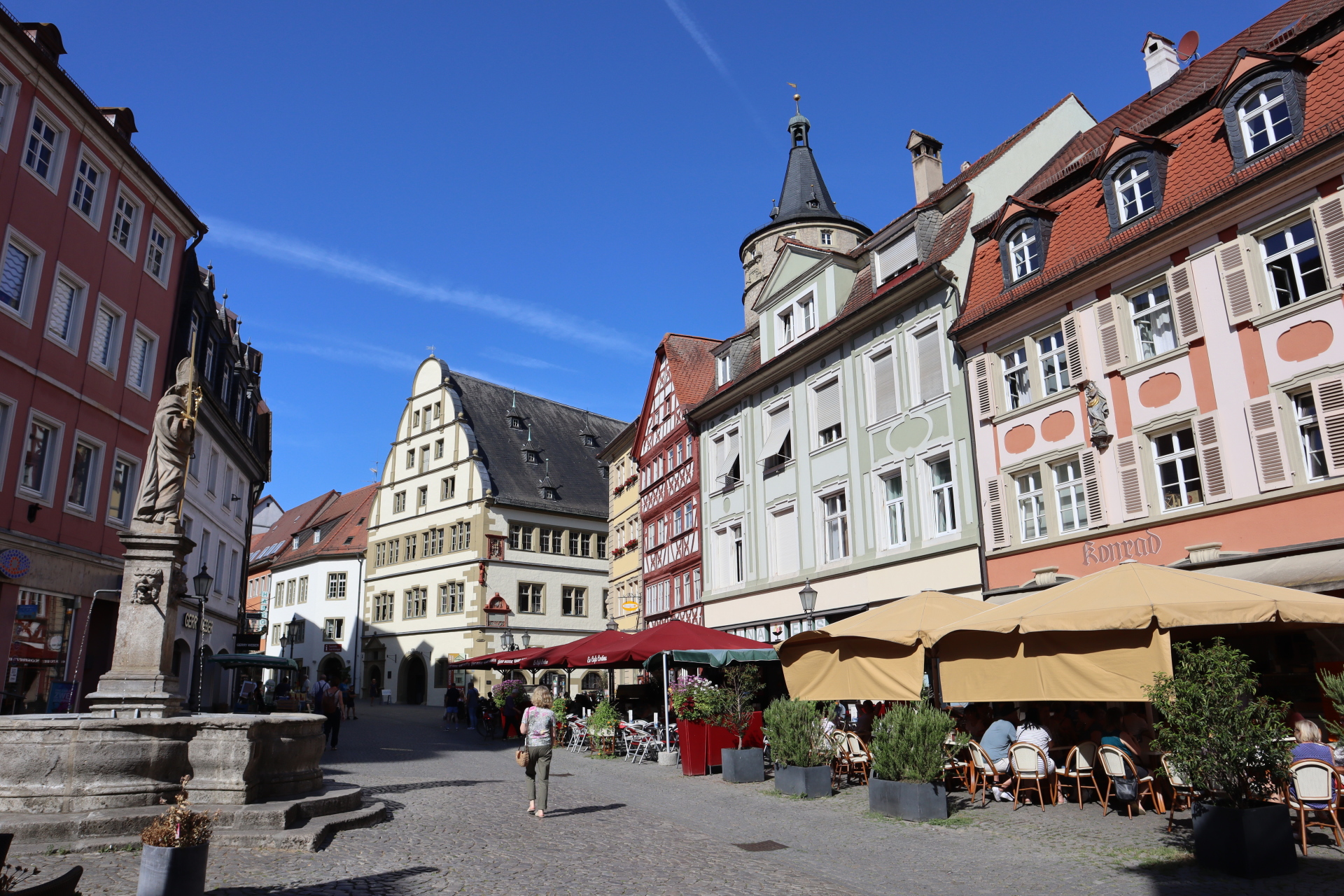
Climate protection is one of the key challenges of our time. Kitzingen is situated in the heart of the Bavarian Main climate region. This region is more severely affected by climate change than other federal states and regions. Between 1951 and 2019, the annual average temperature rose by 1.8 °C. The town of Kitzingen is also doing its bit to counteract the effects of climate change and promote sustainable development locally.

The aim of the city’s climate action initiatives is to reduce greenhouse gas emissions, use energy more efficiently and drive forward adaptation to the climate impacts that are already being felt.

Through specific measures, funding schemes and projects, Kitzingen is set to become a climate-neutral, liveable and sustainable town in the long term.

Latest news

Integrated Climate Action Plan

As a first step in developing the City of Kitzingen’s integrated climate protection strategy, an energy balance was drawn up. Energy consumption across the three sectors – transport, electricity and heating – was recorded throughout the entire urban area. All energy sources, such as natural gas, petrol, diesel, electricity, biomass, biogas, etc., were taken into account. Thanks to a good overall data quality score of approximately 0.81 for the years 2017 to 2021, these years were used to draw up the energy and greenhouse gas balance. The year 2019 serves as the reference year. Annual greenhouse gas emissions (CO₂eq) amount to just under 203,000 tonnes. This equates to greenhouse gas emissions of 9.26 tonnes of CO₂eq per inhabitant. Building on the greenhouse gas inventory, a potential analysis was carried out, which identifies opportunities particularly in the areas of heat supply and renewable energy generation.

Based on the energy and greenhouse gas inventory, the catalogue of measures was developed in collaboration with city council staff, drawing on city council resolutions, feedback from the public and expert opinions. The catalogue of measures forms the core of the climate protection strategy. Various measures have been drawn up across several thematic areas. These measures are intended to help achieve the climate protection targets developed on the basis of the greenhouse gas inventory and the associated scenarios, and to prepare Kitzingen for future developments in the areas of climate protection and climate adaptation. The measures cover the core competences and areas of responsibility of a local authority. The catalogue of measures acts as an overarching framework, providing a broad cross-section of climate protection and climate adaptation issues. The measures are developed, finalised and implemented by individual teams as part of associated workshops or other forms of public participation.

The catalogue of measures is divided into six thematic areas:

  • The areas of mobility, electricity and heating are guided by the findings of the energy and greenhouse gas assessment and identify measures aimed at reducing greenhouse gas emissions.
  • The section on climate adaptation focuses on the effects of climate change that are currently being felt. It outlines measures that the town of Kitzingen can take to address these challenges.
  • The 'Administration' section deals with measures within the city council.
  • The final section, on communication, serves as a supporting component for communication with the public and other stakeholders. A total of 32 measures were set out.


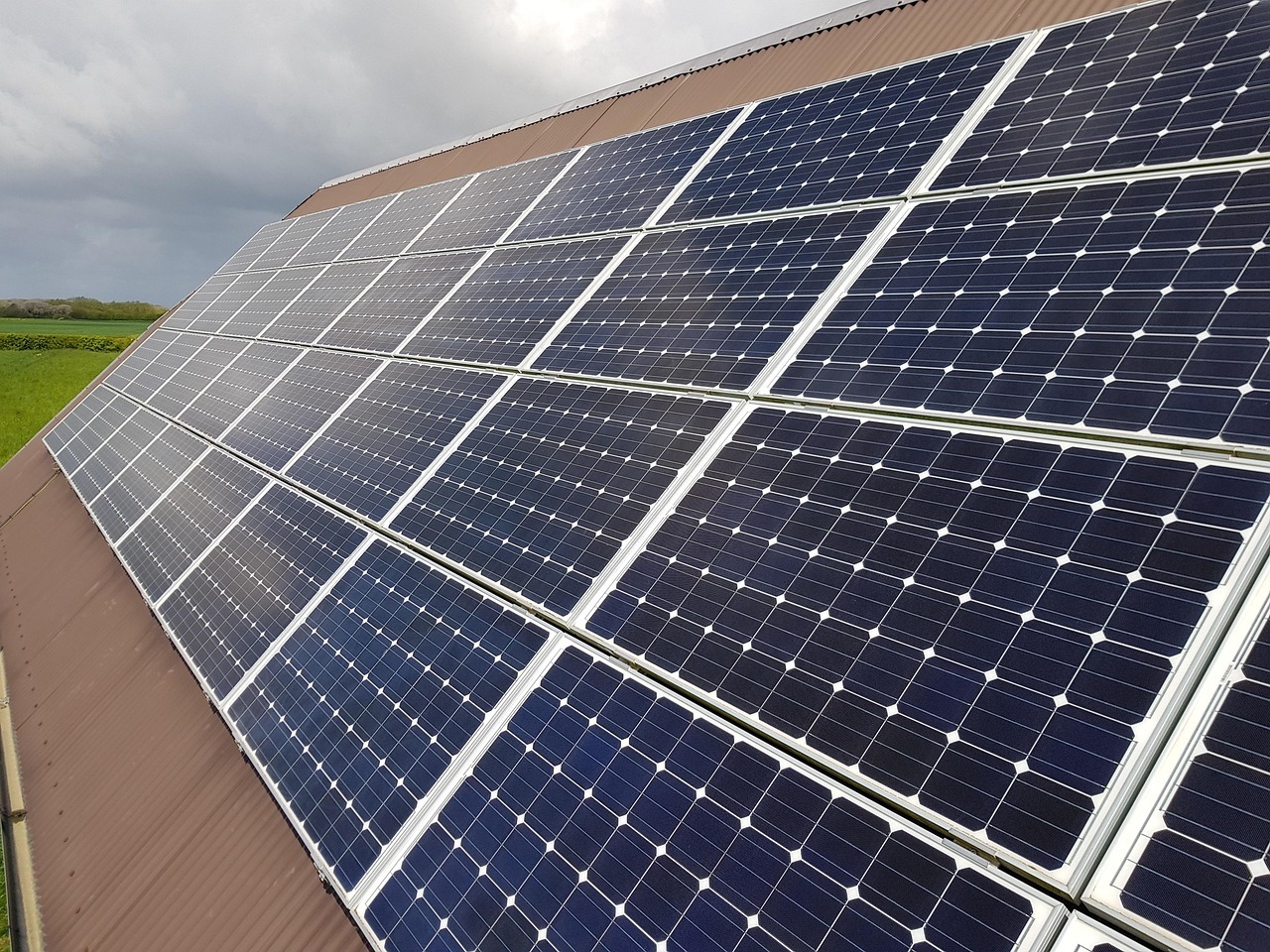
Three major initiatives have been identified as flagship projects in the catalogue of measures. All of these are currently being actively pursued, and the Climate Protection Management team has been tasked with leading each project. Measure S1, ‘Kitzingen Electricity Self-Sufficiency’, focuses on increasing regional renewable energy generation so that the town of Kitzingen can meet its electricity needs exclusively through renewable energy sources. A grant application for measure W1, ‘Municipal Heat Planning’, has been submitted and approved. The project is scheduled for completion by the end of 2025. Finally, measure V1, ‘Greenhouse Gas-Neutral City Administration’, should be mentioned, which has also been launched.

Further information on municipal heating planning

Climate Change Manager

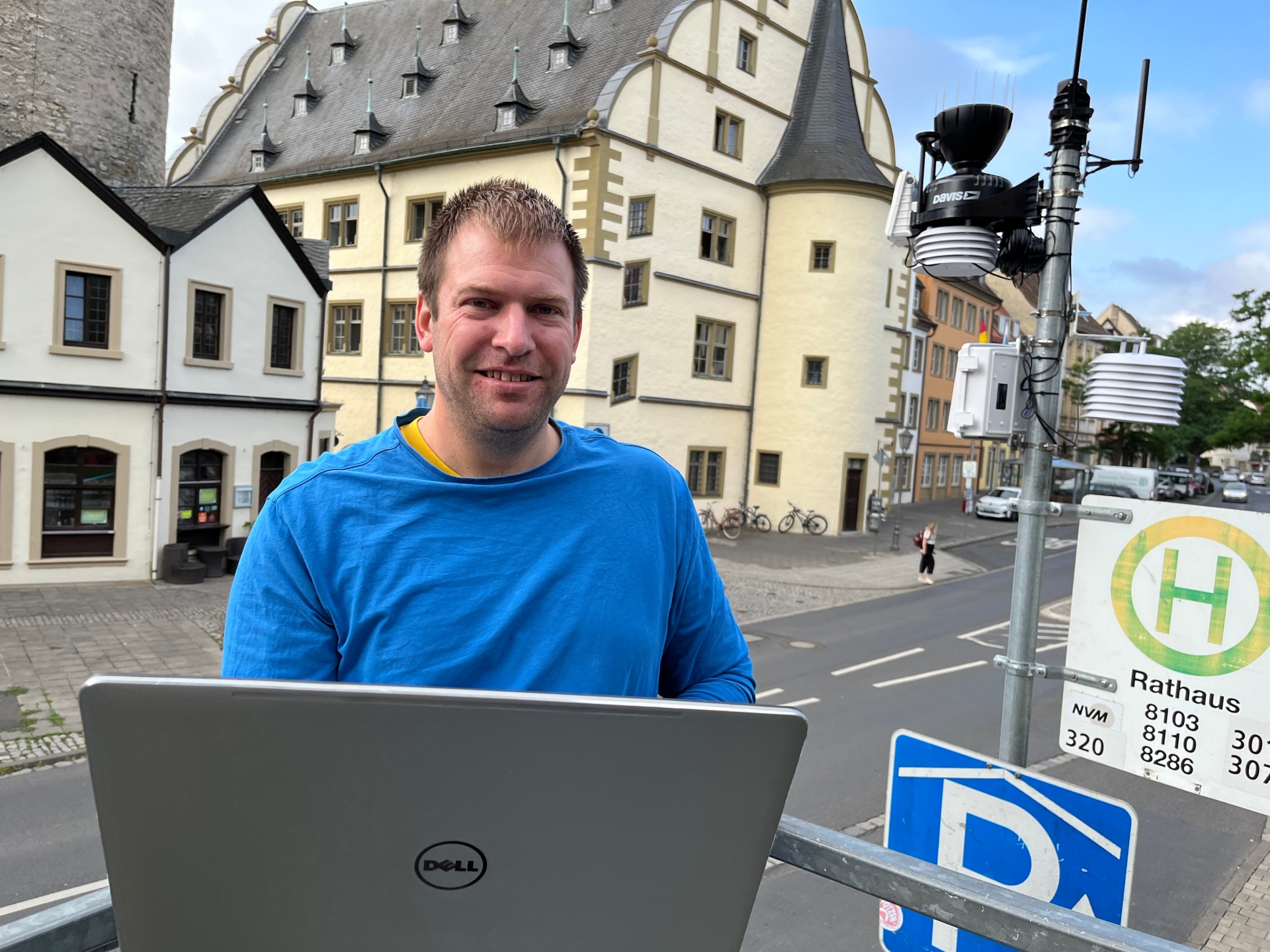
Climate Protection Manager Martin Schneider on the city balcony.

Martin Schneider has been the Climate Protection Manager for the town of Kitzingen since the beginning of July 2022. An engineer specialising in building physics and energy consultancy, he has spent the last few years working for a construction planning firm in Lower Saxony, where he developed and implemented energy efficiency strategies as part of the refurbishment and new construction of residential and non-residential buildings. The Climate Protection Manager, who hails from Schweinfurt, sees local energy self-sufficiency, the mobility transition and climate adaptation as the greatest challenges. He is responsible for overseeing the process of drawing up the climate protection strategy and bears overall responsibility for it. The climate protection strategy lays the foundation for climate protection measures and achievements in the coming years and thus serves as a basis for decision-making and a planning aid. Martin Schneider is also responsible for the accompanying public relations work, facilitating events, and raising awareness and mobilising citizens and other stakeholders.

We would like to hear your views and suggestions regarding climate action in the town of Kitzingen. If you have any comments or suggestions on the subject of climate action in Kitzingen, or if you are interested in getting involved or collaborating with us, please feel free to contact our Climate Action Manager, Martin Schneider.

National Climate Protection Initiative

Logo of the Federal Ministry for Economic Affairs & the National Climate Protection Initiative

Through the National Climate Protection Initiative, the Federal Ministry for the Environment has been launching and supporting numerous projects since 2008 that help to reduce greenhouse gas emissions. Its programmes and projects cover a broad spectrum of climate protection activities: From the development of long-term strategies to practical support and investment-based funding measures. This diversity ensures a wealth of good ideas. The National Climate Protection Initiative helps to embed climate protection at a local level. It benefits consumers as well as businesses, local authorities and educational institutions.

Funding reference number: 67K19140

Background

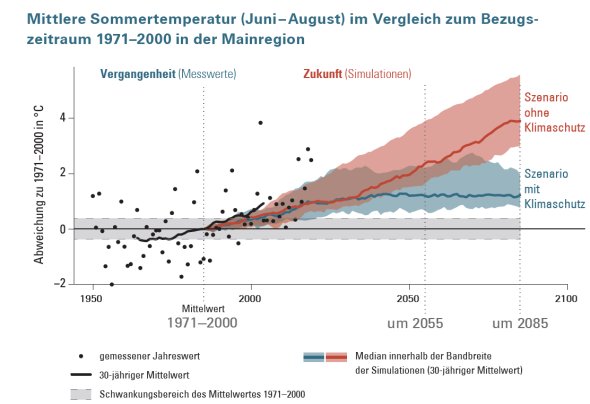
Historical measurements (blue) and a future scenario (red) show the rise in temperature.

Kitzingen is situated in the heart of the Bavarian Main climate region. This region is more severely affected by climate change than other federal states and regions. Between 1951 and 2019, the annual average temperature rose by 1.8 °C. Of particular note are the summer temperatures, which have risen by an average of 2.4 °C. A significant increase has also been recorded in the number of hot days (days with a maximum temperature of more than 30 °C) and tropical nights (nights when the temperature does not fall below 20 °C). Recent years have been even warmer than the average figures and the forecast values. Without climate protection measures, a further significant rise in temperatures is expected over the next 60 years.

Due to the dense development in Kitzingen (particularly in the old town), the local heat stress feels even greater. Numerous sealed surfaces and buildings, a lack of greenery within the town and dark tarmac surfaces lead to so-called heat islands, with the result that it is significantly warmer in the town than in the surrounding area.

The Paris Climate Agreement was adopted in December 2015 at the international climate conference in Paris. It sets out targets and measures to curb the causes of climate change on a global scale. The aim is to reduce greenhouse gas emissions in such a way as to limit global warming to a maximum of two degrees, and ideally 1.5 degrees, compared with pre-industrial levels. It is the first legally binding climate protection agreement under international law at a global level, with a total of 197 parties to the agreement to date.

Under the amended Federal Climate Protection Act, the Federal Government has set itself the target of reducing German GHG emissions by 65 per cent by 2030 compared with 1990 levels. By 2040, GHG emissions must be reduced by 88 per cent, and carbon neutrality must be achieved by 2045.

Help with accessibility

  • General

    We endeavour to make our website accessible. You can find details on this in our accessibility statement. You can send us suggestions for improvement via our feedback form Report accessibility.

  • Font size

    To adjust the font size, please use the following key combinations:

    Larger

    command
    +

    Smaller

    command

    Larger

    Ctrl
    +

    Smaller

    Ctrl
  • Keyboard navigation

    Use TAB and SHIFT + TAB to navigate through next/previous links, form elements, and buttons.

    Use ENTER to open links and interact with elements.

  • Contrast mode

    Press the following key combination to reduce or increase the contrast:

    Enlarge

    control
    option
    command
    .

    Decrease

    control
    option
    command
    ,
    Note: The shortcuts must be activated in the system settings of the operating system.

    Press the left ALT key + left SHIFT key + PRINT to quickly turn high contrast mode on or off.

  • Invert colours

    Press the following key combination to switch the colour inversion on and off:

    control
    option
    command
    8
    Note: The shortcuts must be activated in the system settings of the operating system.

    First activate the screen magnifier and then switch the colour inversion on and off with the following key combinations:

    1. screen magnifier

    +

    2. invert colours

    Ctrl
    Old
    I
  • Screen magnifier

    Press the following key combinations to use the screen magnifier:

    Switch on/off

    option
    command
    8

    Enlarge view

    option
    command
    =

    Zoom out view

    option
    command
    Note: The shortcuts must be activated in the system settings of the operating system.

    Switch on / Enlarge view

    +

    Zoom out view

Select language